
San Diego Music Festival Transportation Guide: Navigate SoCal's 2026-2027 Scene Like a Pro
The USA music festival landscape for 2026-2027 is exploding with momentum—Coachella’s expansion into two full weekends of livestreaming, Lollapalooza’s new sustainability mandates, and Southern California’s own scene cementing San Diego as the breakout destination for fans who want world-class lineups without the LA traffic nightmare. If you’re plotting your festival calendar through 2027, you’re already thinking about tickets, outfits, and which afterparties to hit. But here’s what separates seasoned fest-goers from the stressed-out masses: nailing your San Diego music festival transportation guide strategy before you ever step through security.
San Diego’s festival circuit spans crammed downtown clubs, sprawling Del Mar Fairgrounds, beach-adjacent parks, and the iconic Petco Park. Each venue demands a completely different transit approach. Get it wrong and you’re burning $80 on surge-priced Ubers, circling for parking at 11 PM, or missing your favorite DJ’s opening set. Get it right and you’ll glide between stages, afterparties, and your crash pad with the effortless confidence of a local.
Why San Diego’s Festival Transit Is Trickier Than It Looks
San Diego feels manageable on a map. It’s not LA’s sprawl, not San Francisco’s hill-climbing chaos. That compactness tricks visitors into assuming transportation will be simple. Reality check: the city’s festival venues cluster in three distinct zones with minimal overlap in transit efficiency.
Downtown/Gaslamp cluster (Petco Park, SOMA, Music Box): MTS trolley lines converge here but post-event crowds overwhelm the Green Line within 20 minutes of final encores. Coastal North (Del Mar Fairgrounds, Oceanside amphitheaters): The Coaster commuter train runs festival-adjacent schedules but stops entirely by midnight—problematic when headliners start at 10:30 PM. South Bay/East County (Sleep Train Amphitheatre legacy sites, Chula Vista emerging venues): These require strategic park-and-ride planning or accepting substantial rideshare costs.
The 2026-2027 festival season intensifies these challenges. CRSSD Festival’s expanded three-day format, KAABOO’s rebranded return to Del Mar, and new electronic events at Petco Park’s converted parking lots all concentrate demand on infrastructure that hasn’t scaled proportionally.
MTS Trolley & Coaster: Your Festival Backbone (With Caveats)
The San Diego Metropolitan Transit System isn’t glamorous, but it’s your most predictable festival ally—when you understand its limitations.
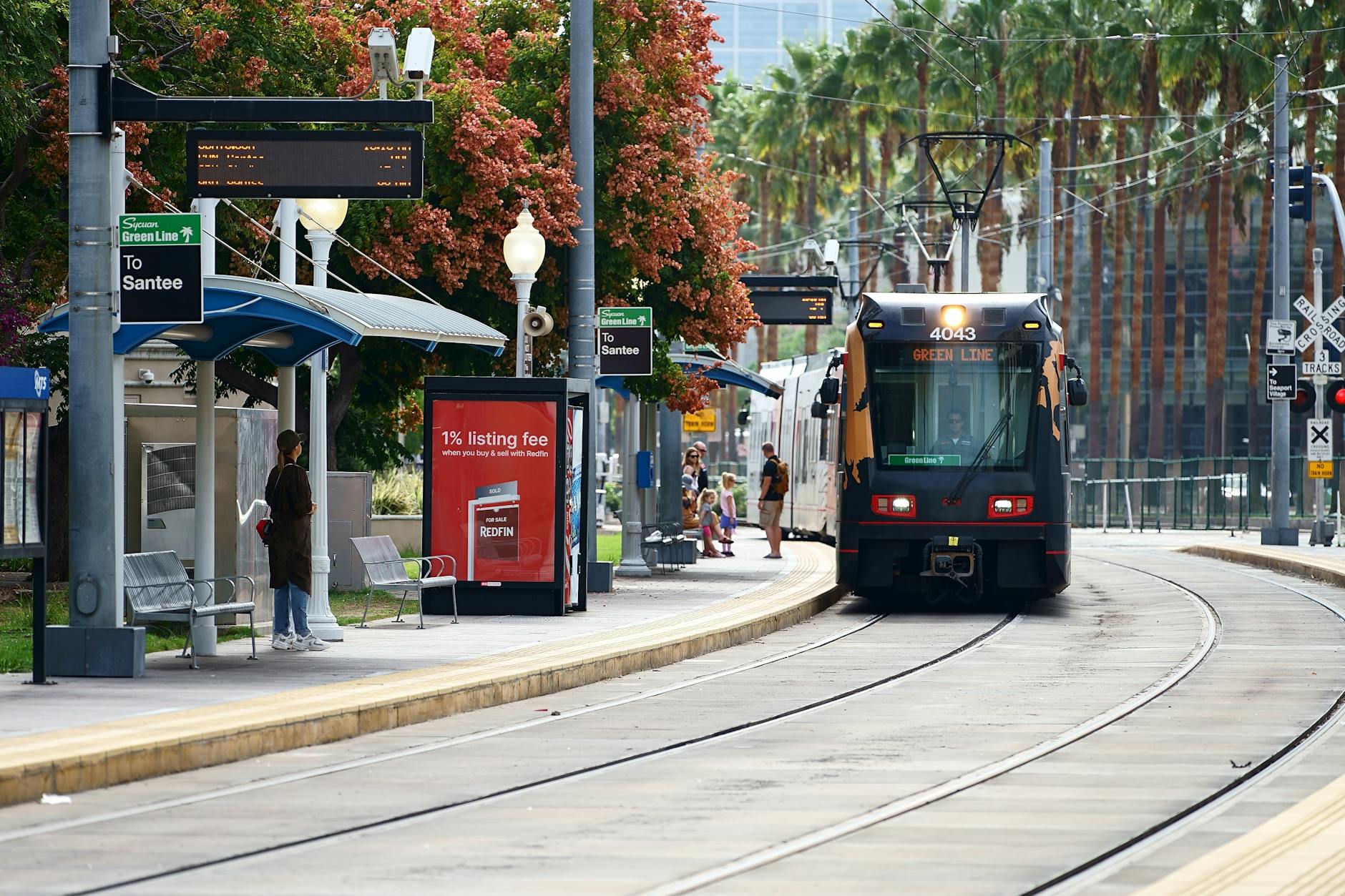
The Green Line serves Petco Park directly, with Gaslamp Quarter and 12th & Imperial stations walking distance from multiple downtown venues. For 2026 events, MTS has finally introduced extended Friday-Saturday service until 1:00 AM on festival weekends, a game-changer from previous midnight shutdowns. Download the PRONTO app for tap-to-pay; paper ticket lines at station machines become bottlenecks you don’t need.
The Coaster northbound from Santa Fe Depot hits Solana Beach (2.5 miles from Del Mar Fairgrounds—shuttle or rideshare required for final leg) and Oceanside. Critical detail: last northbound trains depart downtown at 10:40 PM on Saturdays. If your headliner starts at 9:00, you’re cutting it close. Festival organizers increasingly negotiate dedicated shuttle loops from Solana Beach station—check event apps 48 hours pre-show for confirmation.
The Blue Line connects to SDCCU Stadium legacy events and emerging Chula Vista venues. Less glamorous but often less crowded than Green Line festival chaos. Budget 35-45 minutes from downtown proper.
Pro move: Purchase regional day passes ($6-8) rather than one-way tickets. The psychological freedom of unlimited hops between pre-festival meetups, venue, and afterparty spots eliminates decision fatigue.
Rideshare & Taxi Hacks: Beat the Surge, Protect Your Wallet
Uber and Lyft in San Diego festival contexts follow predictable torture patterns. Post-event surge pricing at Petco Park regularly hits 3.5-4.2x multipliers for 45-60 minutes after encore. Del Mar Fairgrounds exits create worse bottlenecks—single access roads funnel thousands of simultaneous departure demand.
Your counter-strategies:
- The 15-minute walkout: Moving 3-4 blocks from venue perimeters drops surge multipliers dramatically. At Petco, walk toward East Village. At Del Mar, head toward the racetrack’s south side rather than main gates.
- Scheduled rides work inconsistently for festivals—algorithms prioritize immediate demand. Don’t rely on them for critical departures.
- Split and walk to transit: For groups, splitting a rideshare to the nearest trolley station (often surge-free) then completing journeys separately saves 60-70% versus direct rides.
- Wingz and local black car services: Pre-booked flat-rate options exist for 2026-2027 festival season. Less convenient app experience, but locked-in pricing for planned departures.
Taxi stands maintain surprising utility at Petco Park’s designated zones—old-school dispatch systems sometimes outperform app-dependent competitors when cellular networks congest.
Biking, Scooters, and the Coastal Advantage
San Diego’s bike infrastructure rewards festival planners willing to pedal. The Bayshore Bikeway offers protected routes connecting downtown venues to Coronado crash pads and South Bay lodging. Pacific Coast Highway bike lanes serve Del Mar events with less stress than four-wheeled alternatives.
Lime and Bird scooters blanket downtown but face geofenced no-park zones directly around Petco Park and Gaslamp venues during major events. Check apps for real-time restrictions—nothing kills post-show momentum like a $25 improper parking fee at 12:30 AM.
For CRSSD Festival and waterfront events, pedicab relationships matter. Regular downtown pedalers remember repeat customers; establish rapport during daytime arrivals for priority evening pickups. Negotiate rates upfront—$15-25 for Gaslamp-to-Little Italy transfers beats surge pricing.
Hotel bike valet programs at downtown properties (Hotel Indigo, Pendry, Moxy) offer secure overnight storage—worth the premium if you’re festival-hopping multiple days.
Parking Realities: When Driving Makes Sense (And When It Doesn’t)
Sometimes you drive. Maybe you’re hauling camping gear for multi-day events, maybe your group spans six people, maybe you’re hitting Temecula wineries pre-show. Here’s how to do it without the festival parking nightmare.
Petco Park: Official lots run $30-50 for concerts, sell out for festivals. Better move: East Village street parking on J Street and Island Avenue, metered until 8 PM then free, 10-12 minute walk to gates. Arrive by 4 PM for prime spots.
Del Mar Fairgrounds: Official parking is actually reasonable at $15-20 but exit queues last 45-90 minutes post-event. The Solana Beach station park-and-ride ($5 all-day) plus Coaster in, shuttle/ride out, eliminates exit trauma entirely.
Smaller venues (Observatory North Park, Brick by Brick, Belly Up): Residential street parking with 2-hour limits until 6 PM or 8 PM. These neighborhoods enforce aggressively during events—budget $10-15 for nearby paid lots rather than risking $65 tickets.
The hidden gem: ParkWhiz and SpotHero reservations for 2026-2027 festival season increasingly include private lot options never advertised publicly. Book 7-10 days ahead for best selection.
Building Your Personal Transportation Playbook
The best San Diego music festival transportation guide isn’t one-size-fits-all—it’s your customized protocol. Before each 2026-2027 event, run this checklist:
- What’s the last call for my primary transit mode?
- Where’s my surge-escape walking radius if ridesharing?
- Do I have backup cash for taxi stands if apps fail?
- What’s my post-midnight plan B explicitly? (This is where most festival transportation plans collapse—vague intentions dissolve into chaos.)
Save venue-specific notes in your phone. After two San Diego festivals, you’ll have reusable intelligence that transforms transportation from anxiety source to competitive advantage.
The 2026-2027 festival season promises stacked lineups across this city’s evolving venues. Your transportation strategy determines whether you arrive energized, depart efficiently, and preserve enough mental bandwidth to actually remember the music. Plan the logistics. Trust the system. Then lose yourself completely in the experience.
Like what you're reading?
Check out our recommended partner for this niche.
Novem Astra Global Media →